Alright, everyone, buckle up. I know, I know, another launch scrub. SpaceX had to call it off just 30 seconds before liftoff on Saturday, and I can practically hear the collective sigh. But before you write it off as just another delay, let's dig a little deeper, because I think this hiccup actually points to something incredibly exciting about where we're headed in space exploration.
The Real Reason This Scrub Matters
See, the official reason for the scrub was "poor weather in the booster recovery zone". Now, in the old days, that might have meant weeks, maybe months, of delays. We're talking about meticulously inspecting every single component, running countless tests, the whole shebang. But now? SpaceX is aiming for another launch attempt the very next day. That's right, Sunday morning, they're giving it another shot.
What does that tell you? It tells me that spaceflight is becoming, dare I say it, almost routine.
Think about the early days of aviation. Every flight was a nail-biting experiment. Now, we hop on planes without a second thought. That’s the kind of shift we're starting to see with space travel. It's not just about getting off the ground anymore; it's about doing it reliably, efficiently, and repeatedly. This isn't your grandfather's space race; it's a whole new ballgame.
And that booster recovery? That's the key. SpaceX is aiming for its 131st booster landing on the drone ship ‘A Shortfall of Gravitas’ and the 531st booster landing to date. This isn't just about saving money (though it definitely does that). It's about creating a sustainable, reusable space infrastructure. Imagine an airline that throws away its planes after every flight. Absurd, right? That's where we've been with rockets for far too long. Reusability is the holy grail, and SpaceX is leading the charge.
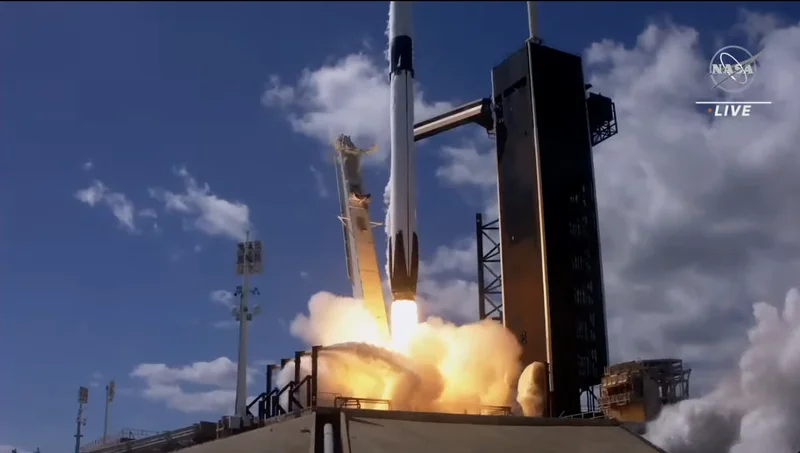
This also comes at a crucial time, with the FAA implementing new launch restrictions. They're limiting commercial launches to between 6 a.m. and 10 p.m. local time. Now, some might see this as a setback, a bureaucratic hurdle. But I see it as a sign of a maturing industry. We’re not just throwing rockets into the sky willy-nilly anymore. We're establishing rules, regulations, and a framework for responsible space operations.
The article also mentions a fireball spotted in the Florida sky, initially mistaken for the SpaceX launch. It turned out to be something else entirely, possibly a satellite reentry. But the fact that people are so used to seeing something in the sky near Cape Canaveral? That says it all. Space is becoming part of our everyday lives.
And let's not forget Blue Origin, Jeff Bezos's space company, is also gearing up for the second launch of its New Glenn rocket. They're aiming to launch it on Sunday, November 9th, as well, to propel NASA's ESCAPADE mission to Mars. This is fantastic news! Competition breeds innovation, and the more players we have in the space game, the faster we'll reach new heights.
But, with great power comes great responsibility. As we venture further into space, we need to be mindful of the potential consequences. Space debris, planetary protection, ethical considerations – these are all critical issues that we need to address proactively. We don’t want to repeat the mistakes of the past as we reach for the stars.
A Future Where Space is Open to Everyone
So, what does this all mean? It means that the future of spaceflight is brighter than ever. We're moving beyond the era of expensive, one-off missions to a world where space is accessible, sustainable, and open to everyone. I believe there is a future where anyone can travel to space, conduct research, and contribute to our understanding of the universe. And that, my friends, is a future worth getting excited about. When I think about the implications, I get goosebumps all over.