[Generated Title]: The Malta Paradox: How a Small Island Nation Became a Blueprint for Global Economic Agility
The world, my friends, is shrinking. Not literally, of course, but in the way that ideas, capital, and even entire business operations can flow across borders with breathtaking speed. And if you want to see this phenomenon in miniature, a perfect, gleaming example of a future we’re only just beginning to grasp, look no further than Malta. This tiny island nation, nestled in the heart of the Mediterranean, isn’t just a dot on the map; it’s becoming a living laboratory for global economic agility, a blueprint for how even the smallest players can punch far above their weight.
Now, you might be thinking, "Aris, what are you talking about? Malta? Isn't that where they play football and people go on holiday?" And yes, you'd be right on both counts! Just look at the recent World Cup qualifying drama: Poland, a nation with a rich footballing history, needing an absolute miracle against Malta to secure an automatic spot. The betting odds, though, painted a clear picture – Malta might not be a walkover, but Poland was expected to clinch those three points. This isn't just about a game; it's a vivid snapshot of how even in the most traditional, globally recognized arenas like international sports, every nation, no matter how small, has its place, its fight, its moment on the world stage. You can almost hear the roar of the crowd in Valletta, the tension electric in the air, as these two nations clash, each fighting for their own piece of glory. It's a reminder that global connectivity isn't just about big powers; it's about everyone finding their footing.
The Invisible Currents of Global Capital
But let's pivot from the visible drama of the pitch to the unseen currents of global finance, because that’s where Malta truly shines as a beacon of what’s to come. We just saw Flutter Entertainment, the behemoth behind Sky Bet, make a strategic move that’s nothing short of a masterclass in global economic maneuvering: they’ve relocated Sky Bet’s headquarters to Malta. This move is detailed in Flutter relocates SkyBet's HQ to Malta in bid to save millions in taxes. We're talking about potentially saving up to £55 million ($72.05 million) in taxes annually. Think about that for a second. That’s not pocket change; that’s a substantial chunk of change that can be reinvested, innovated with, or passed back to shareholders. This isn't just about finding a cheaper address; it's about navigating the intricate, ever-shifting labyrinth of international tax law to optimize operations, a kind of digital-era exploration for corporate efficiency.
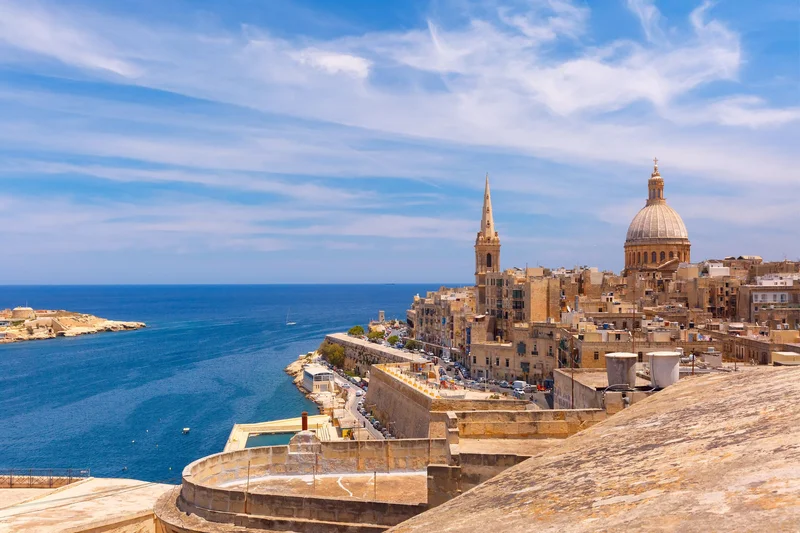
This isn't some rogue operation; it’s a calculated, administrative shift, a move that’s been years in the making, with Sky Bet's regulatory ties to Malta stretching back to 2017. What does this tell us? It tells us that nations like Malta are becoming crucial nodes in the global financial network, offering frameworks that attract massive international players. It's like the early days of the internet, when certain regions became hubs for data centers because of infrastructure or regulatory advantages. Now, we’re seeing that same principle applied to corporate domiciles. When I first saw the scale of these potential savings, I honestly just sat back in my chair, speechless, because it underscores a fundamental shift in how global businesses operate. We're not just talking about physical goods moving across oceans anymore; we're talking about entire corporate identities, legal frameworks, and financial flows.
Beyond Sunbathing: A New Economic Frontier
Of course, not everyone sees this through my rose-tinted, future-focused glasses. Tax specialist Dan Neidle, for instance, put it pretty bluntly: "I know lots of people who’ve gone to Malta. They've all either gone there for sunbathing or to avoid tax." And he's got a point, right? On the surface, it looks like a simple tax dodge. But that's where we need to look deeper, past the immediate headlines, and ask ourselves: why does Malta offer these incentives? And what does it mean for the future of national economies?
This isn't just about a lower corporation tax rate; it's about a strategic embrace of a globalized, digital economy. Malta isn't just a picturesque island; it's a jurisdiction that has actively cultivated an environment attractive to iGaming and other digital-first industries. It’s a testament to how small nations can become incredibly agile, adapting their legal and financial landscapes to carve out a niche in a world dominated by larger economies. Is it reckless, as Neidle suggests, to move people and operations for these savings, risking future regulatory changes? Perhaps, for a company focusing only on the short-term. But for Flutter, a company that recently shifted its primary stock market listing to New York, keeping a secondary in London, this isn't recklessness; it's strategic flexibility, a recognition that the global financial chessboard demands constant repositioning. It’s about building a robust, distributed operational model, much like how resilient software systems are designed to operate across multiple servers to prevent single points of failure.
This paradigm shift raises some profound questions for us, doesn't it? If capital and corporate identities can move so freely, what does it mean for national tax bases, for public services, for the very fabric of our societies? How do nations balance the need to attract global business with the imperative to fund their own citizens' needs? It’s a delicate dance, a tightrope walk between competitiveness and responsibility. But imagine the possibilities if this agility could be harnessed not just for tax optimization, but for fostering truly global innovation hubs, for creating entirely new economic models that benefit everyone. What if every "Malta" out there became a launchpad for the next generation of world-changing technologies, attracting the brightest minds not just for financial incentives, but for the sheer excitement of building the future?
The Future Isn't Static, It's Fluid.
Malta, in its quiet way, is showing us that the rules of the global game are being rewritten. Whether it's on the football pitch or in the intricate dance of international corporate finance, this small island nation is a powerful reminder that size doesn’t dictate impact in our increasingly interconnected world. It's a blueprint for agility, a testament to strategic positioning, and a fascinating case study for anyone trying to understand where our global economy is headed. The future isn't about rigid borders; it's about fluid connections, smart strategies, and the bold vision to adapt. It’s an exciting, complex future, and Malta is right there, at the forefront, showing us how it's done.