Let’s get one thing straight. Fifteen million dollars in the crypto world is couch cushion money. It’s a rounding error. It’s what a bored whale loses on a degen trade before his second cup of coffee. So when I see headlines like Zcash Privacy Meets Solana DeFi with Zenrock’s Wrapped ZEC Crossing $15M in Volume, my first instinct is to laugh.
Is that supposed to be impressive? We’re living in an ecosystem where meme coins with dog pictures do billions in a weekend. And here comes zenZEC, a token promising to bring the holy grail of "privacy" to the lightning-fast, transparent-as-glass world of Solana DeFi, and its big debut number is... $15 million. Give me a break.
But then, you squint a little. You put down the cynicism for a second—just a second—and you wonder. Maybe the number isn't the point. Maybe it’s the signal. Maybe, just maybe, this is the first tremor of an earthquake that could actually change things. Or maybe it’s just another over-engineered solution for a problem that doesn't really exist outside of a Discord channel.
Privacy Theater or the Real Deal?
Aditya Dave, the co-founder of Zenrock, says "Privacy is so core to the ethos of crypto." He then goes on to blame "tradfi" for taking over and sacrificing this sacred tenet. It’s a nice soundbite. My cynical translation? "The Wall Street guys showed up with their fat stacks and transparent regulations, and now we can't do as much weird stuff in the shadows."
He’s not entirely wrong, though. The whole point of this space was supposed to be about breaking away from the old systems, not just building faster, more chaotic versions of them on the blockchain. So Zenrock’s pitch is to port Zcash (ZEC), the OG of privacy coins, over to Solana, the F-16 of blockchains. You get the speed of Solana with the anonymity of Zcash. Sounds great on a PowerPoint slide.
How do they do it? With something called a "decentralized multi-party computation (MPC) network." It’s a clever solution. No, clever isn't the right word—it's an aggressively complicated solution. Imagine you have a private key to a bank vault. Instead of just hiding the key, you melt it down, and recast the metal into ten different, weirdly-shaped trinkets. You give one trinket to ten different people who don't know each other. To open the vault, all ten of them have to show up at the same time and place their trinkets into a special machine that reassembles the key for one-time use. The key itself never exists as a whole, solid object.
That's MPC. It eliminates a single point of failure, which is, offcourse, a good thing. But it also raises some questions, doesn't it? Who are these "independent third parties" holding the pieces of the key? Are they truly decentralized, or is it just a committee of VCs and insiders patting each other on the back? We’re told not to worry about it. Just trust the math. I’ve heard that one before.
So, Who Is This Even For?
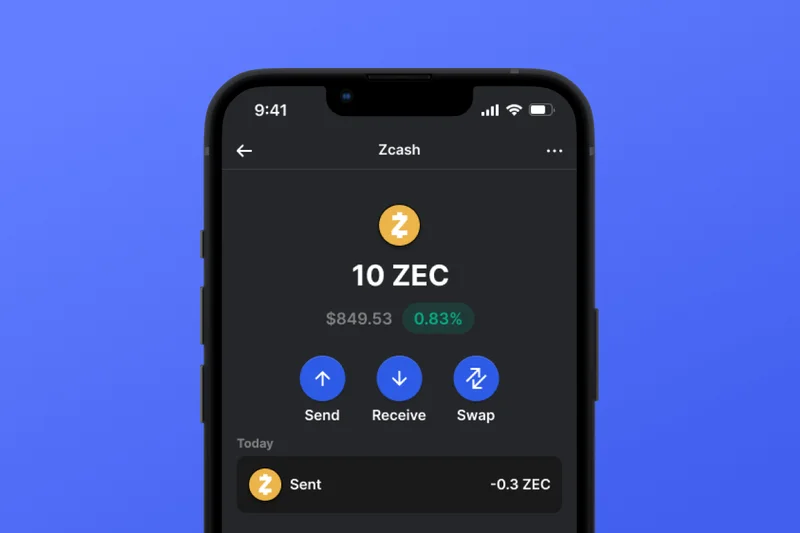
For the first time in over seven years, Zcash holders can supposedly get "real on-chain DeFi exposure." Seven years. In crypto time, that’s a geological epoch. How many original Zcash holders are even left? And have they just been sitting on their hands this whole time, waiting for the day they could finally use their privacy coin on a decentralized exchange like Orca?
The market seems to think something is up. ZEC has apparently gone on a 16-fold tear since September. Is that because of this new Zenrock utility, or is it just the crypto casino spinning its roulette wheel and landing on a dusty, forgotten number? My money’s on the latter. Every project promises to be the first, the best, the only. It’s like the endless stream of "revolutionary" diet fads; they all promise to change your life, but mostly they just change what you're buying this week.
They're already running incentives on Solana to drive liquidity. They promise you'll soon be able to use zenZEC as collateral. These are the standard moves from the DeFi playbook. Build it, subsidize it, and pray that people find a use for it beyond farming your reward token and dumping it on the market.
The real question is, do people actually want this level of privacy in their day-to-day DeFi? We’ve spent years building a financial system on radical transparency, where every transaction is a public record. Now we're trying to bolt an anonymity engine onto it. It feels like putting a silencer on a foghorn. Sure, you can do it, but what’s the point? They're selling this as a revolution in privacy, but to me it just feels like... a niche product for a very specific, and probably very small, audience. Then again, maybe I'm the crazy one here.
Another Shiny New Toy
Look, I get the appeal. The tech is cool. The idea of splicing the DNA of a privacy-focused chain with a high-performance one is intellectually interesting. But at the end of the day, crypto isn't an academic exercise. It's a brutal, unforgiving market driven by hype, utility, and human greed. This whole zenZEC project feels like a beautifully engineered solution that's still searching for its killer problem. Will it find it? Maybe. But for now, it's just another shiny toy in a room already overflowing with them. Call me when the volume has a few more zeroes on the end.