The Universe at Your Fingertips: Why "Space" is About to Mean Something Entirely New
We're all familiar with "space." My space, office space, the dead space in a hard drive, even outer space. But I think we're on the cusp of a moment where the very idea of space is about to undergo a radical transformation. A shift so profound, it'll ripple through everything from how we design our homes to how we explore the cosmos.
Think about it: what is space, really? We tend to think of it as a container, a void to be filled. But what if space isn't just something we find, but something we create? That's the question that's been buzzing in my head lately, and I think the answer is closer than we realize.
The Democratization of "Space"
This isn’t about space travel, though the advancements there are certainly inspiring. This is about something far more immediate and potentially revolutionary: the democratization of space itself. What I mean by that is the ability for anyone, anywhere, to curate, customize, and control their own personal "space" in ways we can barely imagine today.
Consider the rise of the "creator economy." People are building businesses, communities, and entire worlds online. But what’s been missing? A true sense of place. We’re still largely confined to flat screens and clunky interfaces. But imagine a future where you can seamlessly transition between your physical workspace and a virtual environment tailored to your specific needs and desires. A space where you can collaborate with colleagues from across the globe as if they were sitting right next to you.
This isn't just about better video conferencing. I'm talking about a persistent, shared digital realm that blends seamlessly with our physical reality. Think Ready Player One, but less dystopian and more… empowering.
How do we get there? The answer, I believe, lies in the convergence of several key technologies: augmented reality (AR), virtual reality (VR), and, crucially, advancements in spatial computing. Spatial computing, for those unfamiliar—or maybe I should clarify—is essentially the ability for computers to understand and interact with the physical world around them. It allows us to map, model, and manipulate our environment in real-time, creating a digital twin that can be augmented with virtual objects, information, and experiences.
It's like the printing press moment, but instead of democratizing information, we’re democratizing space itself.
But what does this mean in practical terms? Imagine architects designing buildings in fully immersive VR environments, collaborating with clients and engineers in real-time, and then instantly projecting those designs onto a physical site using AR. Imagine surgeons practicing complex procedures on virtual patients, perfecting their techniques before ever stepping into an operating room. Imagine artists creating breathtaking installations that blend seamlessly with the urban landscape, transforming our cities into living canvases.
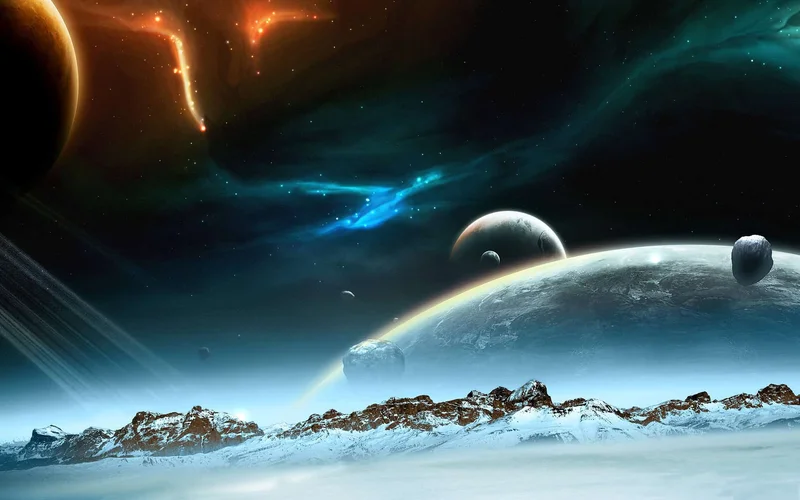
And here's where it gets really exciting: what if we could extend this concept beyond our immediate surroundings? What if we could create virtual outposts in outer space, allowing us to explore distant planets and galaxies from the comfort of our own homes? What if we could build virtual habitats on Mars, practicing colonization before ever setting foot on the red planet?
These are the kinds of possibilities that keep me up at night, in the best possible way.
Of course, with great power comes great responsibility. As we begin to blur the lines between the physical and digital worlds, we need to be mindful of the ethical implications. How do we ensure privacy and security in these new environments? How do we prevent the creation of digital divides, where some have access to these technologies and others are left behind? These are questions we need to address proactively, before they become insurmountable challenges.
The Future is Built on Shared Dreams
So, what's the real story? We’re not just talking about incremental improvements to existing technologies. We're talking about a fundamental shift in how we perceive and interact with the world around us. We're talking about the dawn of a new era, where the universe is truly at our fingertips. The possibilities are endless, and I, for one, can’t wait to see what the future holds.